BIOSORRA Secures $3.5M Funding to Scale Biochar Carbon Removal and Regenerative Agriculture
Led by atmosfair and Fondo Nimbus, two leading climate and impact investors dedicated to advancing scalable decarbonization and farmers’ impact,

Stay updated with BIOSORRA’s latest developments, achievements, and media coverage
FIND OUT MORE ABOUT OUR


Led by atmosfair and Fondo Nimbus, two leading climate and impact investors dedicated to advancing scalable decarbonization and farmers’ impact,
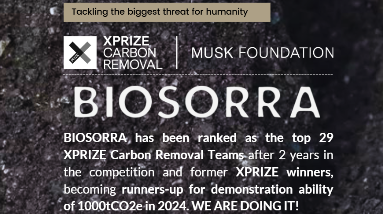
Selected from 195 University-Affiliated Proposals, Winning Teams Showcased New Concepts & Supporting Technologies for Scalable Carbon Dioxide
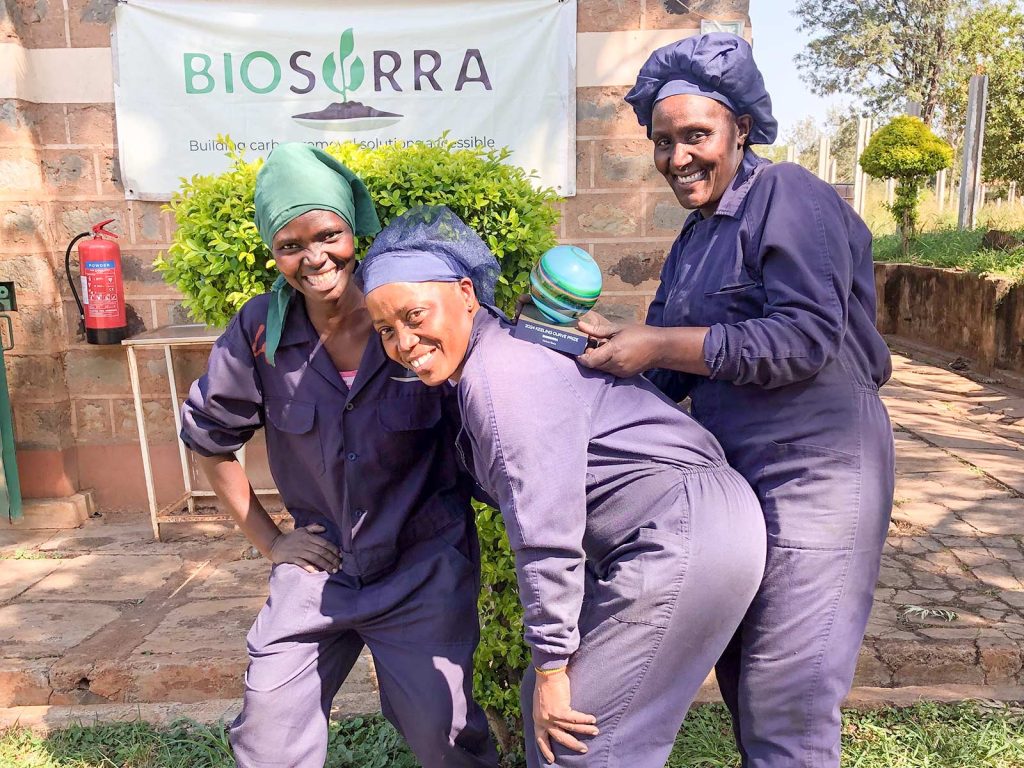
In the heart of Kenya, amidst the challenges of waste management and agricultural sustainability, two MBA classmates
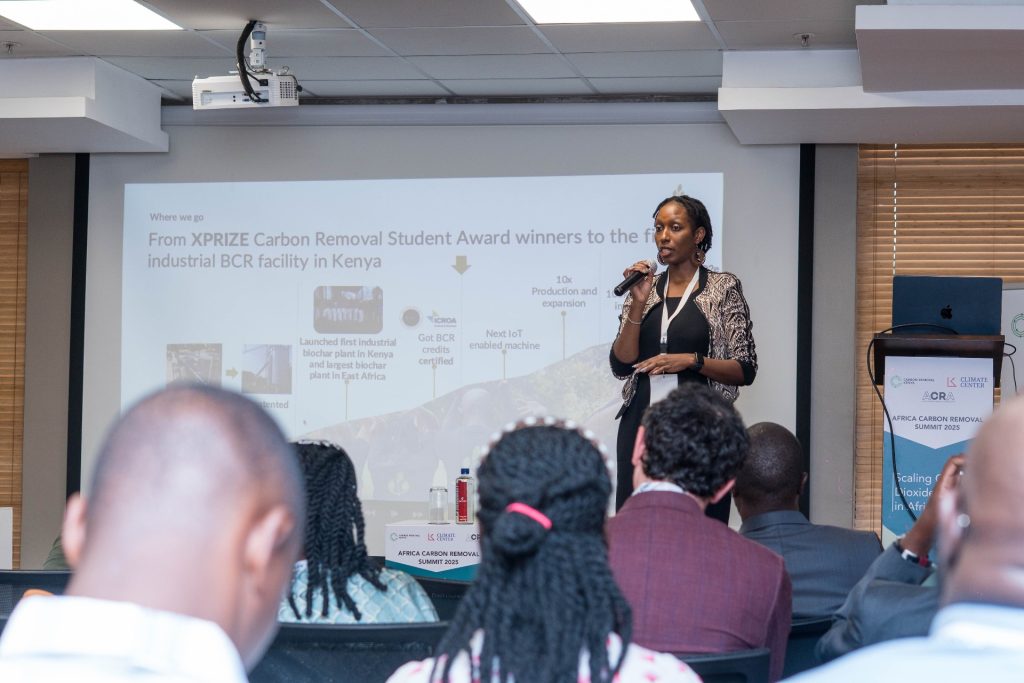
BIOSORRA joins Africa Carbon Removal Accelerator (ACRA) to scale carbon removal solutions across the continent.
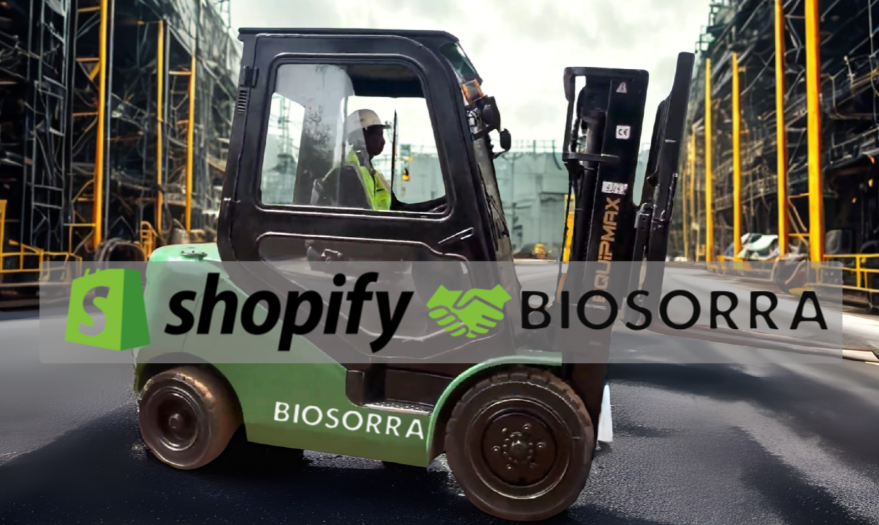
BIOSORRA featured in Shopify’s expanded carbon removal portfolio, highlighting the company’s commitment to scaling biochar solutions in
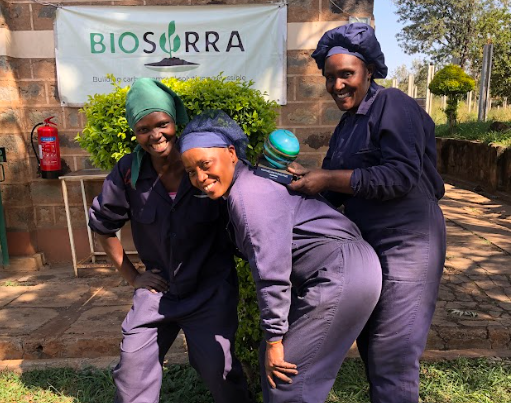
Recognized for innovative carbon removal solutions that combine climate action with agricultural benefits in Kenya.
BIOSORRA’s carbon removal project highlighted in Milkywire’s Climate Transformation Fund portfolio.
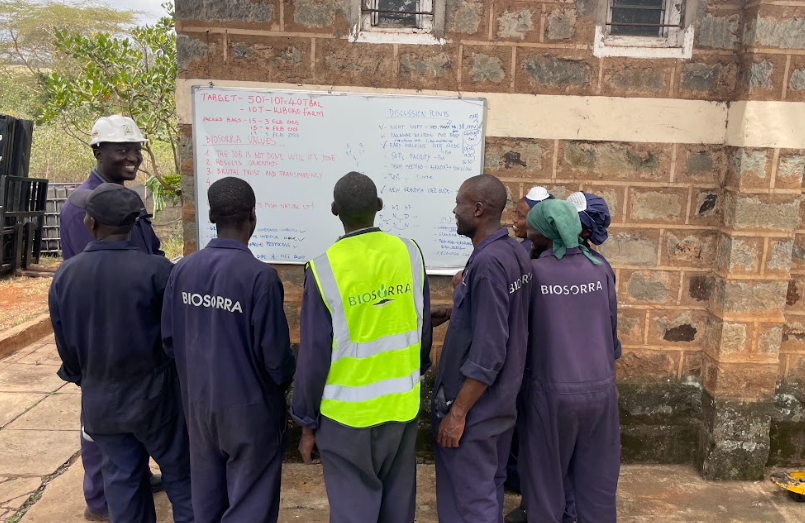
Kenya-based carbon removal company BIOSORRA establishes East Africa’s largest industrial biochar production facility.

BIOSORRA featured at the IESE Global Alumni Reunion 2023, showcasing innovative climate solutions.

FAQ’s
Biochar is a stable, carbon-rich material made by heating agricultural biomass in low-oxygen conditions (pyrolysis). When applied to soils, it
locks away carbon for the long term and improves soil health: especially relevant for tropical farming systems where degraded soils are a real
problem and biomass residues are abundant.
The tropical belt is a core strength for BIOSORRA: commodity crops (e.g., cocoa, coffee) generate large volumes of underused residues that
can be converted into high-quality biochar. Working in this zone unlocks both climate impact and meaningful agronomic co-benefits while
supporting expansion across Sub-Saharan Africa and Latin America.
We focus on tropical commodity supply chains where biomass is plentiful and logistics are practical that are well-suited to turning waste into
durable carbon removal and soil benefits.
BIOSORRA is science-led and tech-forward proprietary process technology supported by best-in-class engineers and tier 1 pyrolysis advisors and academia. We deploy through modular, plug-and-play AgriCarbon Hubs designed for on-the-ground reliability and scale – we operate deeptech engineering to ensure durable removal and not artisanal one-offs.
Our biochar delivers high-quality, science-backed durable carbon removal with MRV and measurable agronomic impact value for farmers.
We convert carbon from agricultural residues into durable biochar carbon removal, solving waste challenges. This “waste-to-value” model supports circularity while maintaining industrial practicality.
Yes. Our modular hubs are engineered for easy to install, operate and maintain, field deployment and day-to-day operations, backed by a hands-on team and clear measurement, reporting, and verification (MRV). The emphasis is on operational simplicity with scientific rigor.
Scalability is built in: plug-and-play Agricarbon Hubs is set up to build the one-biochar-solution playbook to replicate across the tropical belt, pairing strong tech/QA with partners that have reliable biomass.
Our biochar has obtained C-Sink Premium and ICROA certification in 2025, and has one of the highest CO2e to biochar produced ratios, This underlines the science-led performance you’d expect from a tech-driven CDR pathway. We pair that with robust MRV and permanence practices
Yes. High-quality biochar removals contribute to corporate net-zero strategies when used after deep emissions cuts, and they deliver co-benefits in soil health, yields, and community impact – key drivers for stakeholders and brand integrity. We are already operational and able to delivery carbon removal today.
Biochar removals can address parts of Scope 3 where abatement is hard, provided purchases meet quality, MRV, and durability expectations and align with credible climate governance. We guide buyers through quality assurance and stakeholder communication.